
Most weeks, someone sets a small box on our counter and asks a version of the same question. It belonged to a grandmother, or an aunt, or it came out of a house that was being cleared. Nobody knows what it is.
That question is answerable, and usually in a few minutes. The method is the same for someone dating an inherited piece and for someone shopping for vintage jewelry in DC for the first time, because jewelry carries its own evidence. Not in one place, and rarely in the form of a neat date stamp, but in three places at once: the marks, the stones, and the way the thing was physically put together.
Here is how a jeweler reads a piece, in the order we actually do it. You can do most of this yourself with a 10x loupe and good light.
1. Start with the marks
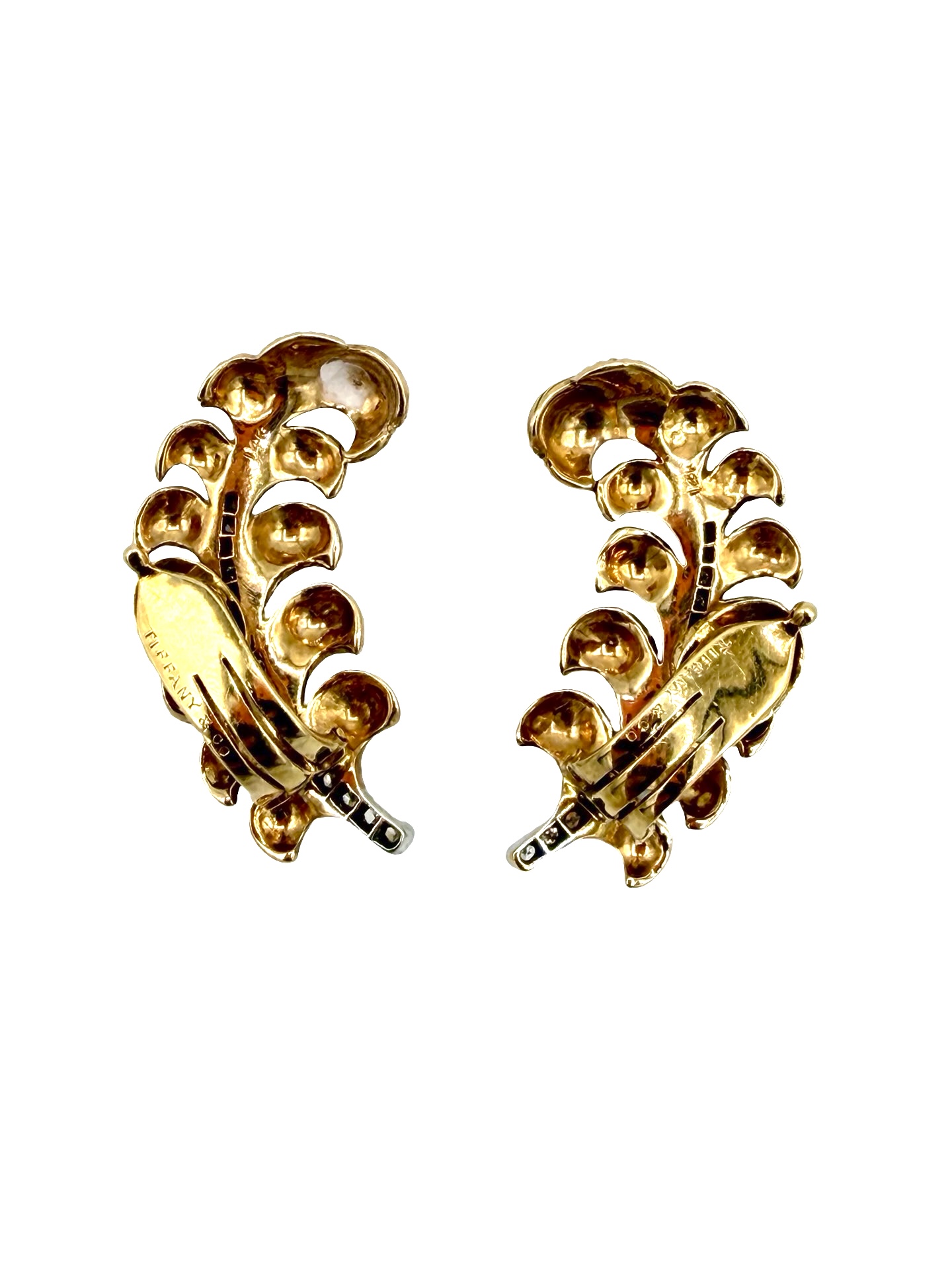
Turn the piece over. Look inside the ring shank, on the back of the brooch, on the tongue and the plate of a clasp, on the reverse of a pendant bail.
If the piece is British, you may be in luck. The hallmarking system there is one of the oldest consumer protection schemes in the world, and the Goldsmiths’ Company Assay Office has been marking metal in London since 1300. Under the Hallmarking Act 1973, a British piece carries at minimum a sponsor’s mark identifying who submitted it, a fineness mark stating the metal purity, and an assay office mark showing where it was tested. There were traditionally also date letters, each office using its own font and letter case in cycles, which is what lets a specialist date a British piece to a single year. Date letters became optional in 1999, though the offices largely still apply them.
Now the part that surprises people. American antique jewelry usually has no date mark at all. The United States never built a national assay office system with date letters. Marking here has been voluntary as to date and origin, regulated for accuracy rather than administered by an assay office, and the FTC’s Guides for the Jewelry, Precious Metals, and Pewter Industries still govern how purity and material claims may be made today. There were brief local exceptions, including a Baltimore assay office that operated from 1814 to 1830 and a short-lived New York attempt in 1871, but nothing that lasted or covered the country.
So on this side of the Atlantic, the marks narrow the field rather than answering the question. A few that do real work:
| Mark | What it tells you |
| 14K, 18K, 10K | American gold purity convention |
| 585, 750, 375 | European decimal purity, meaning 14K, 18K and 9K |
| PLAT, PLATINUM, 950 PLAT | Platinum, generally 1900 onward |
| IRID PLAT, 10% IRID | Platinum alloyed with iridium, 90/10, the standard American platinum alloy from roughly 1900 onward |
| STERLING, 925 | Sterling silver |
| Lion passant | British sterling silver |
| A name or initials in a shaped shield | A maker or sponsor, and the most valuable thing on the piece |
That last row matters more than all the others. A maker’s signature can change what a piece is worth by a large multiple, because it brings documented provenance and established collector demand with it. The marks are often tiny, worn, and hidden. Before anyone sells anything as scrap, someone should look for one properly.
2. Then read the stones
Diamond cutting changed as the technology changed, which makes the stones a rough clock.
An old mine cut is squarish or cushion shaped in outline, with a high crown, a small table, and an obvious culet. The style dates back to the early 1700s, so while you are generally looking at something made before about 1890, the shape itself is much older. GIA’s guide to old mine cuts covers the proportions in detail.
An old European cut is round. According to GIA, the round girdle became possible as diamond cutting technology advanced in the late 1800s, and these stones still have a higher crown, a much smaller table, and greater total depth than a modern round brilliant, along with larger culets and different star and lower half facets. Roughly 1890s into the 1930s.
A modern round brilliant has a large table, a small or absent culet, and fine, bright scintillation rather than broad flashes. Post-1930s and increasingly standardized after that.
The practical version: hold the stone under a single light source and look at how it returns light. Older cuts throw fewer, larger flashes. Modern cuts throw many small ones. Once you have seen the two side by side, you will not confuse them again. It is also why so many people fall for old cuts in candlelight and low interior light, where the broad flashes read as alive in a way a modern stone does not.
Colored stones carry their own clues. A cabochon cut, polished to a dome rather than faceted, points earlier for most stones. Certain materials also cluster by era: garnet, coral, jet and seed pearls in Victorian work, pearl and white sapphire in Edwardian pieces, calibré-cut emerald, sapphire and ruby in Art Deco. GIA’s Gem Encyclopedia is the reference we point clients to for individual stones.
Look at the setting too. Closed backs, where you cannot see through to the stone, generally point earlier. Foiled backs point earlier still. Open galleries that let light through the pavilion became the norm later.
3. Then read the construction, which is where the answer usually is
This is the part most guides skip, and the part a bench jeweler trusts most, because construction is hard to fake convincingly and it reflects the tools available when the piece was made.
Brooch fittings. A simple C-shaped hook with no catch generally indicates earlier work, often nineteenth century. A rolling safety catch appears in the early twentieth century and dominates from the 1920s onward. A long tube-style trombone clasp points to European work. Pin stems that extend well past the body of the brooch also suggest earlier manufacture. Our vintage brooches are a good place to see the difference between fittings in person.
Earring fittings. For non-pierced and modern fittings, screw backs, clip backs, and posts arrived in that rough order. Screw backs dominate roughly 1900 to the mid 1950s, clips appear in the mid 1930s and dominate through the 1960s, and the modern post and butterfly follows. This sequence does not apply to nineteenth century pierced wires and shepherd’s hooks, which predate all three. Be careful here in any case, because fittings are the most commonly replaced part of any earring. A converted fitting tells you about the repair, not the piece.
Evidence of hand work. Under a loupe, look at the back. Soldering seams that are slightly irregular, gallery work that is not perfectly symmetrical, tiny file marks, engraving where the line varies in depth: these are signs of a person. Castings from a mold read differently, with uniform surfaces and sometimes visible sprue marks. The American Gem Society and Jewelers of America both maintain credentialing standards for the people trained to read this kind of detail.
Wear in the right places. Genuine age wears unevenly and predictably. The underside of a ring shank thins where it meets the palm. High points on a mount go smooth. Engraved lines soften. Wear that is even across the whole piece, or wear on a surface that would never touch anything, deserves suspicion.
4. Putting the three together
No single tell is conclusive. Periods overlap, pieces get altered, and fittings get replaced. What identification actually looks like is three imperfect lines of evidence agreeing.
| Period | Typical metals | Typical stones | Typical construction |
| Victorian, 1837 to 1901 | Yellow gold, silver, gold-filled | Old mine cuts, seed pearls, garnet, coral, jet | Closed backs, C-clasps, hair and mourning work, heavy gold |
| Edwardian, 1901 to 1914 | Platinum, platinum over gold | Old European cuts, pearls, white sapphire | Fine filigree, millegrain edges, garlands, bows, lace-like openwork |
| Art Deco, 1920s to 1930s | Platinum, white gold | Old European and transitional cuts, calibré colored stones, onyx | Geometry, symmetry, strong color contrast, architectural lines |
| Retro, mid 1930s to 1950 | Yellow and rose gold, less platinum | Larger colored stones, synthetic rubies | Bold scrolls, volume, ribbon and bow forms, machine-age curves |
Two useful notes on that table. Edwardian is the period when platinum genuinely entered fine jewelry, which is why so much lace-like work survives from it: platinum is strong enough to hold very fine structures. And the term Art Deco comes from the Exposition Internationale des Arts Décoratifs et Industriels Modernes, held in Paris in 1925. GIA’s overview of the period notes that new steel cutting tools, mechanized polishing wheels, and finer abrasives in the 1920s are what made its precise geometry possible, and Gems & Gemology published a detailed study of Art Deco jewelry that remains a standard reference. If you like the look, our guide to Art Deco engagement rings goes further into the style.
If you want to calibrate your eye against the best possible examples, the Victoria and Albert Museum holds around 3,500 jewels in its William and Judith Bollinger Jewellery Gallery, including 49 Art Deco vanity cases by Cartier, Van Cleef & Arpels and Lacloche, loaned in memory of Freddie Mercury, who collected them. Closer to home, the Smithsonian’s Hope Diamond has one of the best documented ownership histories of any gem in the world, which makes it a useful lesson in what provenance actually means.
Where amateur identification tends to go wrong
- Assuming a purity stamp is a date. It is not. 14K was used for well over a century.
- Assuming “antique” means old enough to matter. In the trade, antique conventionally means roughly a hundred years or older, vintage means an earlier era but not yet a century, and estate simply means previously owned, at any age. A ring made in 2018 and sold once is estate jewelry. Our complete guide to estate jewelry in DC covers the distinction in more detail.
- Trusting a single mark. Marks get added, worn away, and forged. Construction is much harder to fake.
- Cleaning before anyone has looked. This is the one that causes real damage. Aggressive cleaning can strip patina that helps date a piece, dissolve foil behind older stones, loosen already-fragile settings, and destroy the surface of soft or porous materials. Bring it in dirty. We would rather see it dirty.
Bring the piece you cannot identify into our DC jewelry store
We have been buying, selling, and restoring jewelry in Washington since 1888, which means our specialists have handled a very large number of the pieces sold in this city over the past century. Some of them were sold by us, to the great-grandparents of the people who now bring them back.
Bring in whatever is puzzling you. We will look for the marks, read the stones, examine the construction, and tell you what we think it is and why. If you would like to sell, we buy antique and vintage pieces outright. If you would rather keep it and wear it, our bench can make that possible. And if you are simply curious what good period work looks like, our cases of vintage rings and vintage watches are open to browse.
Come see us at the Barlow Building in Chevy Chase or at the Willard Hotel downtown, or check both locations and hours first.
Key Takeaways
- Identification rests on three lines of evidence read together: marks, stones, and construction. No single one is conclusive.
- British pieces can often be dated to the year through the assay system, which has operated in London since 1300 and requires a sponsor’s mark, a fineness mark, and an assay office mark.
- American antique jewelry generally carries no date mark, so construction detail carries more weight here.
- IRID PLAT and 10% IRID indicate 90% platinum with 10% iridium, the standard American platinum alloy from roughly 1900 onward.
- Old mine cuts are cushion shaped and generally cut before about 1890. Old European cuts are round, with high crowns and small tables, roughly 1890s to 1930s.
- Brooch catches, earring fittings, solder seams, and the pattern of wear are often more reliable than any stamp.
- Antique means roughly a century or older, vintage means an earlier era, and estate simply means previously owned.
- Do not clean a piece before it has been examined. Cleaning destroys evidence and can damage fragile settings.
Frequently Asked Questions About Vintage Jewelry in DC
How can I tell if my jewelry is antique or just old-looking?
Look for the three kinds of evidence together. Genuine age shows uneven, logical wear, hand-finished irregularity on the reverse, period-appropriate stone cuts, and fittings consistent with the era. Reproductions usually get the front right and the back wrong, because the back is where hand work is expensive.
What does IRID PLAT mean on my ring?
It indicates platinum alloyed with iridium, typically 90% platinum to 10% iridium, which hardens the metal. It was the standard American platinum alloy from roughly 1900 onward and remained in use for decades, so the mark places a piece in the twentieth century and is especially common on Edwardian and Art Deco work.
Is there a US equivalent of British hallmarks?
No national one. The United States never operated a compulsory assay office system with date letters, and marking has been voluntary as to date and origin while remaining regulated for accuracy. American pieces typically carry a purity stamp such as 14K and sometimes a maker’s mark, which is precisely why construction analysis matters more here.
Where can I see vintage jewelry in DC before I buy?
Come and handle it. Photographs flatten the differences that matter most, particularly how an older cut returns light and how hand finishing reads on the reverse. Our showrooms in Chevy Chase and at the Willard Hotel keep period pieces in the cases specifically so clients can compare eras side by side, and there is no obligation attached to looking.
Should I clean an antique piece before bringing it in?
Please do not. Ultrasonic cleaners and household solutions can loosen fragile settings, dissolve foil behind older stones, damage porous materials such as pearls, coral, turquoise and opal, and remove patina that helps establish age. We will clean it appropriately once we know what it is.
Does a maker’s mark really change the value that much?
Yes, and frequently by a multiple rather than a percentage. A signature from a recognized house or workshop brings documented provenance, established collector demand, and a known standard of work. It is the single most valuable piece of information on most pieces, and it is often the easiest to miss. Our jewelry education pages cover what else drives value.
DC Vintage Jewelry Glossary
Art Deco The design movement of the 1920s and 1930s, named for the 1925 Paris Exposition Internationale des Arts Décoratifs et Industriels Modernes. In jewelry it means geometry, symmetry, strong color contrast, and platinum.
Assay office An institution that tests precious metal for purity and applies an official mark. Britain has four: London, Birmingham, Sheffield and Edinburgh.
Brooch An ornament fastened to clothing with a pin. Its catch mechanism is one of the most reliable dating clues on any antique piece.
Cabochon A stone polished to a smooth dome rather than faceted. Common in earlier work and with opaque or translucent materials.
Culet The facet or point at the very bottom of a stone’s pavilion. Older cuts often have a large, open culet visible as a window through the center. Modern cuts usually have a very small one or none.
Edwardian The period from 1901 to 1914, when platinum entered fine jewelry and made very fine openwork possible. Light, lacy, white.
Estate jewelry Any piece with a previous owner, at any age. Not a synonym for antique.
Filigree Delicate openwork built from fine metal wire or pierced sheet. Platinum’s strength allowed increasingly fine filigree from the Edwardian period onward.
Fineness The purity of a precious metal, expressed in parts per thousand. 750 means 75% gold, which is 18 karat.
Foil Thin reflective metal placed behind a stone in a closed setting to brighten it. Water-sensitive and easily ruined by cleaning, which is why closed-back pieces need careful handling.
Hallmark An official mark struck into precious metal to certify purity, and depending on the system, the maker, the testing office, and the year.
Iridium A very dense platinum-group metal, alloyed with platinum at around 10% to harden it for jewelry use.
Millegrain A decorative border of tiny raised metal beads, worked along an edge with a knurling wheel. Characteristic of Edwardian and early Art Deco pieces.
Old European cut The round predecessor to the modern brilliant, roughly 1890s to 1930s, with a taller crown, much smaller table, greater depth, and a larger culet. Produces broad flashes rather than fine sparkle.
Old mine cut An early hand-cut diamond, roughly cushion shaped, with a high crown, small table, and pronounced culet. The style dates to the early 1700s and was largely superseded by about 1890.
Patina The surface character metal acquires with age and handling. On antique jewelry it can be evidence of age, which is why aggressive polishing reduces both information and value.
Pearl A gem formed inside a mollusc. Porous and soft, so it is damaged by heat, acids, and most cleaning solutions.
Platinum A dense, naturally white, corrosion-resistant precious metal. Strong enough to hold very fine settings, which is why it defines Edwardian and Art Deco work.
Provenance The documented history of ownership of a piece. Strong provenance measurably raises value.
Soldering Joining metal with a filler alloy that melts below the melting point of the pieces being joined. On antique work, slightly irregular solder seams are evidence of hand assembly.
Victorian The period from 1837 to 1901, spanning romantic, grand and aesthetic phases. Generally yellow gold, closed backs, and sentimental motifs.


