
There is a moment that happens at our counter several times a week. Someone hands over a ring, apologizing, saying they assume it is beyond help.
Usually it is not. Jewelry is more repairable than almost anyone expects, and the things people assume are fatal are often routine. Finding an antique DC jeweler with a working bench matters more than the damage itself, because most of what looks final is a few days of skilled work.
The opposite also happens. Someone brings in a ring they have worn every day for fifteen years, entirely unaware that the prongs holding the center stone have worn to the thickness of a pencil line and the stone is one knock away from being gone.
Both conversations come from the same gap. Most people have never been told what actually wears out on a piece of jewelry, or what a bench can do about it. So here it is.
What wears out, and roughly when
Jewelry is a mechanical object worn against the hardest surfaces in daily life. Things wear in a predictable order.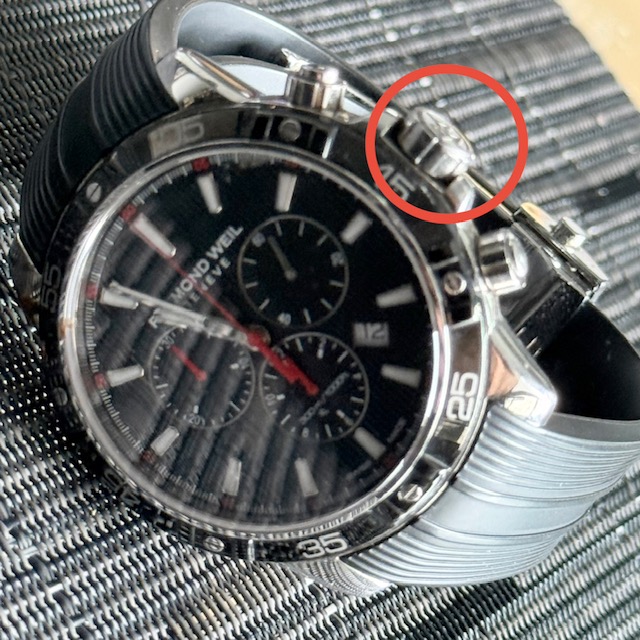
- Prongs wear first. They are the thinnest structural part of a ring and they take every impact. They thin, they bend, they lift, and eventually one breaks. This is the single most common serious problem we see, and it is almost always invisible to the owner.
- Ring shanks thin from underneath. The part of a ring that sits against the palm wears against everything you touch. A shank can wear from its original thickness down to something that will crack under normal pressure.
- Chain wears at the connections. Not usually in the middle of a link, but at the bail where a pendant hangs and at the jump rings and clasp, where the same two surfaces rub against each other thousands of times.
- Clasps and catches fail from fatigue. A spring ring or a box clasp is a small mechanism operated twice a day. It has a service life.
- Earring posts and backs loosen. Posts bend and thin at the base. Friction backs lose their grip gradually, which is why earrings disappear.
- Pearls and beads are strung on thread, and thread ages. Silk stretches and absorbs body oils and perfume. A knotted strand worn regularly needs restringing periodically, and the point of the knots is that a break loses one pearl instead of all of them.
There is a seasonal pattern to this in Washington, and late summer is the peak of it. Chlorine attacks the alloy metals in white gold, which can lead to stress corrosion cracking in exactly the places you least want it, meaning prongs and thin shanks. Sunscreen and lotion build a film across the underside of a stone that no rinsing removes, dulling the stone and hiding a setting that is coming loose. Sand is an abrasive. Humidity swells fingers, which changes where a ring sits and wears.
The uncomfortable pattern: nearly all of this is invisible until it fails. Which is the entire argument for having pieces looked at on a schedule rather than after something goes wrong.
How often a piece should be checked
The insurer Jewelers Mutual recommends professional inspections twice a year, along with an updated appraisal roughly every two years. Our own guidance, allowing for how differently people wear things:
| Piece | Inspection frequency | Why |
| Engagement ring or daily-wear ring | Every 6 months | Constant wear, prongs take everything |
| Everyday earrings, daily chain | Once a year | Posts, bails, clasp fatigue |
| Occasion jewelry | Once a year, or before a season of wear | Problems develop in storage too |
| Regularly worn pearls | Restring roughly every 1 to 2 years | Thread stretches and absorbs oils |
| Mechanical watch | 10 years for a modern movement, every 4 to 5 for older calibers | Lubricants degrade and worn parts accelerate other wear |
One detail worth knowing: some insurance policies require periodic professional inspection to keep coverage in force on a scheduled piece. If a stone is lost and there is no inspection record, a claim can become complicated. Worth reading your rider. The National Association of Jewelry Appraisers maintains the standards this documentation is built on.
A prong check itself takes a few minutes. A jeweler puts the ring under a microscope, works around each prong with a probe, and either tells you it is fine or shows you the problem on a screen. Most people who have never had it done are surprised by what is visible at magnification.
What a bench can fix, and what it costs you to wait
Here is the honest version, in the order we would prioritize it.
Routine, and no reason to delay:
Retipping a worn prong, which means adding new metal to the tip and reshaping it. Rebuilding or replacing a whole prong. Reshanking, meaning cutting out a worn section of the band and fitting new metal. Resizing up or down. Soldering a broken chain. Replacing a clasp, a bail, or an earring post. Tightening a stone. Rhodium plating white gold that has yellowed. Restringing pearls. Straightening a bent mount. Replacing a watch battery, which we do while you wait.
Skilled restoration work, which takes longer and requires an experienced bench:
Rebuilding filigree or gallery work on an antique piece, matching the original technique. Recreating a missing section of a period mount. Re-cutting millegrain along an edge. Replacing a lost calibré-cut colored stone, which means finding or cutting a stone to a specific shape and size. Converting a fitting, such as putting a modern safety catch on an old brooch, without damaging the original. This is the work that separates a general repair shop from an antique DC jeweler, and it is why we keep the bench in house rather than sending pieces out.
Genuinely difficult or inadvisable:
Repairing a crack in a diamond or gemstone. A stone can sometimes be re-cut, which makes it smaller, but a fracture cannot be mended. Restoring the surface of a badly worn cameo, intaglio, or enamel. Recovering an engraving that has been polished away, since the metal is gone. Repairing certain older costume constructions where the base metal will not take heat. Bringing back the original surface of a badly over-polished antique piece, because polishing removes metal permanently.
That last category is why we ask people not to have antique pieces aggressively polished by a general shop. Over-polishing is one of the few things in this trade that cannot be undone, and it takes patina with it.
Two things that go wrong when repair is done badly
- Heat in the wrong place. A torch near a heat-sensitive stone can destroy it. Emerald, opal, pearl, turquoise, coral, amber, tanzanite and many treated stones all have limits, and hardness alone does not tell you which, since a stone can rate well on the Mohs scale and still be ruined by thermal shock. GIA’s Gem Encyclopedia and the American Gem Trade Association both publish care guidance stone by stone. Any competent bench removes stones or heat-shields them before working nearby. A shop that does not is gambling with your stone, and the damage is usually permanent.
- Solder that does not match. Using a lower-grade solder or the wrong alloy leaves a visible seam and a weak point that will fail again in the same place. Good repair matches the metal, and under the FTC’s Jewelry Guides the purity claim stamped on a piece has to remain accurate after work is done to it.
Five warnings: look for an antique jewelry repair in DC
- You can hear the stone. Hold the ring next to your ear and tap it gently with a fingertip. A faint rattle or click means the stone is moving in the setting.
- A prong catches on fabric. A prong that snags has lifted or worn to a hook. It is on its way to failing.
- The band flexes. If a ring gives noticeably when you squeeze it between two fingers, the shank has thinned past its structural limit.
- The stone has rotated. If a stone that used to sit square now sits at an angle, the setting has moved.
- A chain has a stretched or opening link. Especially at the bail. Links open gradually, then all at once, generally in a parking lot.
Any of these means the piece comes off and goes into a box until someone looks at it. We would much rather do a fifteen-minute repair than have the conversation that follows a lost stone.
The other thing a bench can do: make an unworn piece wearable
A different problem comes across the counter constantly. Someone has an inherited piece they genuinely love and never wear, because it does not suit them, or does not fit, or feels too formal for their life.
That is a design problem, and it is solvable. Stones can move into a new mount. A brooch can become a pendant. A large cocktail ring can be reworked into something wearable daily. An unmatched pair of earrings can be reimagined as one piece. If the goal is something that reads period but fits a modern life, it is worth looking at finished vintage jewelry in DC first, because seeing what survives intact often changes what someone wants done to their own piece.
Our honest position, said as often as we say anything: some pieces should not be altered. If a piece has period integrity, a maker’s signature, or unusual survival in original condition, changing it reduces both its value and its interest, and we will tell you that even when you would rather hear otherwise. Auction houses including Sotheby’s build entire sale narratives around originality, and once it is gone it does not come back. There is usually a middle path, such as leaving the original intact and making something new alongside it. Our cases of vintage rings exist partly because pieces like that were preserved rather than broken up.
Bring in the piece you have been ignoring to our DC jewelry experts
Our repair department is one of the reasons this business has lasted since 1888. Our watch technicians and master goldsmiths do the kind of work that is getting harder to find in the United States, and they do it in house rather than sending it away. Both the American Gem Society and Jewelers of America maintain credentialing programs worth asking any jeweler about before handing over something irreplaceable.
Start with a prong check. It is quick, there is no obligation, and you will leave knowing whether the piece you wear every day is sound. Bring the chain with the broken clasp and the earrings missing a back while you are at it. See our repair services, browse everything else we do, or visit either showroom in the Barlow Building in Chevy Chase or at the Willard Hotel downtown. Get in touch and we will make time.
Key Takeaways
- Prongs wear first and fail most often, and the wear is nearly always invisible without magnification.
- Daily-wear rings should be inspected every six months. Most other fine jewelry, once a year.
- Chlorine attacks the alloy metals in white gold and can lead to stress corrosion cracking in prongs and thin shanks, which is why late summer is peak repair season.
- Regularly worn pearls should be restrung roughly every one to two years, because silk stretches and absorbs oils.
- Some insurance policies require periodic inspection to maintain coverage on a scheduled piece. Check your rider.
- Retipping, reshanking, resizing, clasp replacement, restringing and rhodium plating are all routine.
- Fractured stones cannot be mended, and polished-away engraving cannot be recovered. Over-polishing an antique is permanent.
- Heat-sensitive stones including emerald, opal, pearl, turquoise, coral and amber must be removed or shielded before torch work nearby. Hardness does not predict heat tolerance.
- Rolex recommends a service roughly every ten years on a current-production watch, while older movements commonly want attention every four to five years.
- Five signs to stop wearing a piece immediately: an audible rattle, a prong that snags, a shank that flexes, a rotated stone, a stretched link.
Frequently Asked Questions About Antique Jewelry Repair in DC
How do I know if my diamond is loose?
Hold the ring close to your ear and tap it lightly with a fingernail. If you hear a faint click or rattle, the stone is moving and the ring should come off until a jeweler looks at it. You can also try to move the stone very gently with a fingertip. Any perceptible movement means the setting needs attention now.
How often should an engagement ring be checked?
Every six months for a ring worn daily. Prongs are the thinnest structural element on the piece and they absorb every impact your hand takes. A check takes a few minutes under a microscope, and catching a thinning prong is dramatically cheaper than replacing a lost stone. The same applies to anything from our engagement ring collection once it goes into daily wear.
Can a cracked diamond or gemstone be repaired?
No. A fracture in a stone cannot be mended. In some cases a stone can be re-cut to remove damage, which makes it smaller and may change its proportions, and whether that is worthwhile depends on the stone. This is why heat-sensitive and included stones need careful handling during any repair nearby.
Will resizing damage my ring?
Not when it is done properly. Resizing involves cutting the shank, adding or removing metal, and re-soldering, and a good bench will match the metal and finish so the work is invisible. Rings with stones set all the way around the band, or with intricate patterning on the shank, are more complex and sometimes better sized with an insert instead. We will tell you which case yours is before starting.
Why should I use an antique DC jeweler rather than any repair shop?
Antique repair is a different discipline from modern repair. It means matching original techniques rather than simply filling a gap, respecting patina instead of polishing it away, sourcing stones cut to obsolete shapes, and knowing when the right answer is to do less. Most retail jewelers now send repairs to a third party, often out of state. Ask where the work is actually done, and ask to see examples of period restoration before you hand over something irreplaceable.
How long does a repair take?
Sizing, a clasp, or a battery is often same day or a few days. Retipping and most prong work runs a few days to about a week. Restoration on an antique piece, or anything requiring a stone to be sourced or cut to match, takes longer and we will give you a realistic date rather than an optimistic one. Full mechanical watch servicing is measured in weeks, not days, by anyone doing it correctly.
Is it better to repair, redesign, or sell?
It depends on where the value sits. A worn mounting holding good stones is often a strong candidate for resetting. A piece with period integrity or a maker’s signature should generally be preserved as is. And if selling is the right answer, preparation matters: our guide to getting the best price for vintage jewelry and our antique buying page both cover what to do first. Our estate jewelry guide and education pages go further.
Glossary
Brooch An ornament fastened to clothing with a pin. Converting an antique brooch to a pendant is common restoration work, and the original catch should be preserved where possible.
Cameo A design carved in relief, often in shell or hardstone. A badly worn cameo surface generally cannot be restored, because the detail has been physically lost.
Enamel Powdered glass fused to metal with heat. Chipped or lost enamel on an antique piece is specialist work and not always recoverable.
Filigree Delicate openwork built from fine wire or pierced sheet metal, common in Edwardian and Art Deco mounts. Rebuilding it requires matching the original technique rather than filling a gap.
Goldsmith A craftsperson who works precious metal by hand. The bench trade behind every repair described here, and a shrinking profession in the United States.
Millegrain A border of tiny raised metal beads worked along an edge with a knurling wheel. Wears smooth over decades and can be re-cut by a skilled bench.
Mohs scale A relative ranking of mineral scratch hardness from 1 to 10. Useful for wear resistance, but it says nothing about how a stone tolerates heat, acids, or impact.
Patina The surface character metal acquires with age and handling. On antique jewelry it is evidence of age, which is why over-polishing reduces both value and information.
Pearl A gem formed inside a mollusc. Porous, soft, and strung on thread that ages, so pearls need both careful cleaning and periodic restringing.
Rhodium A bright white platinum-group metal, applied as a thin electroplated coating to give white gold its finished color. It wears and is reapplied as routine maintenance.
Ring A band worn on the finger. The shank is the portion that encircles it, and it is the part that thins from wear against the palm.
Soldering Joining metal with a filler alloy that melts below the melting point of the pieces being joined. Matching the solder to the metal is what makes a repair invisible and durable.
Stress corrosion cracking Cracking that develops when a metal under residual stress is exposed to a corrosive agent. In jewelry this is the mechanism behind chlorine damage to white gold prongs and thin shanks.


