

Looking for Jewelry Appraisals in Washington DC? Here’s What You Need to Know
Your jewelry tells a story, one that deserves to be understood with precision and care. A diamond ring that’s traveled through three generations, a vintage brooch discovered at auction, an investment piece whose value has quietly appreciated over the years. Each requires more than casual estimation. True appraisal demands gemological expertise, historical knowledge, and the kind of discerning eye that only comes with decades of experience.
Beyond establishing monetary value, the right appraisal protects your investment in tangible ways. It ensures your insurance coverage accurately reflects replacement costs, provides essential documentation for estate planning, and offers clarity when important decisions about your collection arise. Yet finding an appraiser in Washington DC who possesses both technical mastery and refined judgment requires careful consideration.
So, what separates an authoritative appraisal from the rest? And why does expertise matter so profoundly when it comes to understanding what you truly own?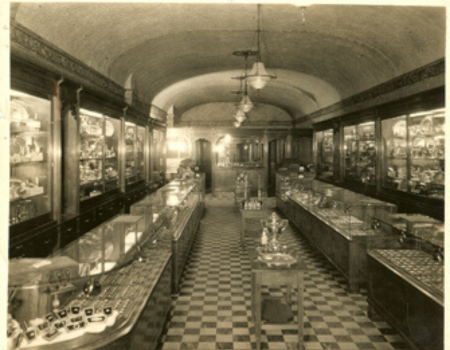
Where to Get Jewelry Appraised in Washington DC
Finding a reputable jeweler for appraisals in DC requires more than convenience. It demands credentials, experience, and sophisticated equipment to deliver accurate valuations. At Charles Schwartz & Son, DC’s oldest jeweler, we’ve been appraising fine jewelry, gemstones, vintage pieces, and luxury watches for over a century.
What distinguishes us? Our team brings 100+ years of refined expertise to every evaluation.
Why choosing the right appraiser matters:
Experience and Specialization: With over a century of expertise in Washington DC, our team has appraised the full spectrum of fine jewelry. From antique brooches to contemporary diamond engagement rings to intricate mechanical watches.
Professional Certifications: According to the Gemological Institute of America, appraisers should have both gemological and appraisal training, along with a thorough understanding of how jewelry is made.
Advanced Technology: Seek appraisers that utilize cutting-edge equipment to examine every facet of your jewelry and detect subtle characteristics that affect value.
Client reviews: Always check reviews to gauge trustworthiness. With decades of satisfied clients, Charles Schwartz & Son has built a reputation for honesty, expertise, and excellent service in Washington DC.
For additional educational resources, the Jewelers of America offers comprehensive information on industry standards, while the Gemological Institute of America (GIA) provides guidance on gemstone evaluation.
What to Expect During a Jewelry Appraisal in Washington DC
Understanding the appraisal process helps you appreciate the thoroughness behind accurate valuations:
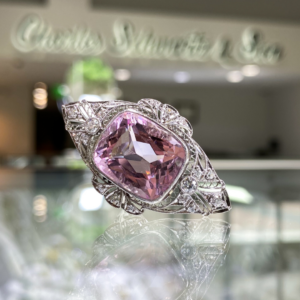
Initial Examination: Your appraiser begins with a comprehensive visual inspection, examining the overall condition, style, and construction. Experienced eyes can often identify the era, origin, and even specific workshop that created a piece.
Precise Measurements: Your jewelry is carefully measured and weighed. For rings, this includes finger size and band width. Gemstones are measured in millimeters and weighed in carats. Metal components are tested for purity (10K, 14K, 18K, platinum) and weighed to determine material value.
Gemstone Analysis: For pieces with gemstones, appraisers conduct technical assessments using gemological instruments:
- Cut quality: Proportions, symmetry, and polish of each stone
- Color grading: For diamonds, placement on the color scale; for colored gemstones, evaluation of hue, tone, and saturation
- Clarity evaluation: Identifying and mapping internal inclusions and external blemishes
- Carat weight: Precise measurement of each stone’s weight
Market Research: Your appraiser researches current market conditions, comparing your piece to recent sales of similar items to ensure accurate contemporary valuation.
Additional considerations include rarity and historical significance. According to the National Association of Jewelry Appraisers, professional appraisers must gather all available pertinent facts relative to the item being appraised before arriving at a reported value. Once the evaluation is complete, you’ll receive a detailed appraisal report documenting your piece’s value, essential documentation for insurance coverage, estate planning, or future sale.
Different Types of Jewelry Appraisals
Understanding which appraisal type you need ensures you receive appropriate documentation:
Insurance Appraisals: Determines replacement value, what it would cost to replace your jewelry with a similar item of comparable kind and quality in today’s retail market. Insurance appraisals typically reflect the highest value.
Fair Market Value Appraisals: Used for estate planning, donations, or resale, this reflects what a willing buyer would pay a willing seller in the current market.
Estate Appraisals: When settling an estate or planning inheritance, you need accurate valuations for tax purposes and equitable distribution among heirs.
Liquidation Value: Reflects what you could realistically expect in an immediate sale scenario.
Contact us today, or visit us at one of our locations to schedule an appraisal and learn more about the true value of your precious jewelry.
Frequently Asked Questions About Jewelry Appraisals in Washington DC
How much does a jewelry appraisal cost in Washington DC?
Appraisal costs vary depending on the piece’s complexity and the appraisal type needed. At Charles Schwartz & Son, we provide transparent pricing and can offer estimates based on your specific requirements.
What’s the difference between an appraisal and a certification?
A certification (like a GIA diamond report) documents a gemstone’s characteristics: its cut, color, clarity, and carat weight. An appraisal assigns monetary value to the piece, considering the gemstones, metal, craftsmanship, designer, condition, and current market conditions. According to Jewelers of America, jewelry appraisals should not be confused with diamond or gemstone grading reports, which can only be provided by major gemological laboratories and which do not include a value. Many appraisals reference existing certifications as part of the valuation process.
Do I need an appraisal if I have the original receipt?
Yes. Jewelry values change over time with market fluctuations, and receipts don’t provide the detailed gemological information insurance companies require. An independent appraisal from a certified gemologist confirms authenticity and current value, essential for adequate insurance coverage.
Should I get antique or vintage jewelry appraised?
Absolutely. Antique and vintage jewelry requires specialized expertise to evaluate properly. Age, provenance, historical significance, rarity, and period-specific craftsmanship all affect value. Our team has extensive experience with estate jewelry from every era and can identify characteristics that significantly impact valuation.
What should I bring to my jewelry appraisal appointment?
Bring any documentation you have: original receipts, previous appraisals, certificates, or information about the piece’s history. If you know anything about where the jewelry came from or who made it, that context can be valuable. Also, specify the purpose of your appraisal (insurance, estate planning, resale) so we can provide the appropriate type of valuation.
How Often Should You Get Jewelry Appraised?
Jewelry values fluctuate with market conditions, precious metal prices, and gemstone availability. According to the GIA, many appraisers suggest updating an appraisal every two to three years. If you own particularly valuable pieces or precious metal prices have changed significantly, consider updating more frequently.
Regular appraisals ensure your insurance coverage keeps pace with current replacement costs, protecting you from being underinsured in the event of loss or theft.
Sources
- Gemological Institute of America (GIA) – Jewelry Appraisal Guide: https://4cs.gia.edu/en-us/blog/appraisal-tips/
- Jewelers of America – Guide to Jewelry Appraisals: https://www.jewelers.org/buying-jewelry/jewelry-repair-and-care/appraisals
- Gemological Institute of America (GIA) – Official Website: https://www.gia.edu/
- National Association of Jewelry Appraisers (NAJA): https://najaappraisers.com/
- American Gem Society – Jewelry and Diamond Appraisals: https://www.americangemsociety.org/jewelry-and-diamond-appraisals/


