Ruby is the birthstone for July and the most prized of the red gems. It is a variety of corundum colored by chromium, it rates 9 on the Mohs scale of hardness, and the finest stones glow with a red the trade calls pigeon’s blood. Charles Schwartz & Son, Washington DC’s oldest jeweler, founded in 1888, has handled estate and antique rubies for more than 135 years from The Willard Hotel in Washington and the Barlow Building in Chevy Chase, Maryland. This guide covers what gives a ruby its value, how a specialist grades one, how the gem appears across the major periods of fine jewelry, and what to know before you buy, sell, or appraise a red stone in the capital.
What Exactly Is a Ruby?
A ruby is the red variety of corundum, the crystalline form of aluminium oxide. Pure corundum is colorless. A trace of chromium turns it red, and the more chromium present, the deeper the color. The same mineral colored by other elements becomes sapphire. At 9 on the Mohs scale, ruby is second only to diamond in hardness, which is why antique stones survive daily wear so well. According to the Gemological Institute of America, ruby is also the gem of the 15th and 40th wedding anniversaries.
Pigeon’s Blood and Burmese Origin
The most coveted ruby color is called pigeon’s blood: a vivid, near pure red with a faint blue undertone and a strong inner glow. The term comes from the Mogok Valley of Myanmar, formerly Burma, whose marble deposits hold little iron to mute the color and enough chromium to make the stone fluoresce in daylight. Independent Swiss laboratories such as Gübelin and SSEF now apply the pigeon’s blood grade only to exceptional material, so the phrase carries real weight on a laboratory report.
How do Specialists Grade Ruby?
Color is the most important quality in any ruby. The finest stones read as a rich, slightly purplish red that is neither too dark nor washed out. Clarity, cut, and carat weight follow, the same framework the Gemological Institute of America uses for colored stones. Fine rubies above one carat are rarer than diamonds of the same size. A specialist weighs:
- Color: vivid red with strong saturation, no brown or orange cast
- Clarity: eye clean is ideal, though fine inclusions can confirm a natural stone
- Cut: symmetry and proportion that return light evenly
- Carat weight: larger fine rubies are scarce, so size raises value sharply
- Origin and treatment: Burmese origin and an untreated stone each carry a premium
More than ninety percent of rubies on the market have been heated to improve color and clarity. Heat is an accepted practice as long as it is disclosed, but an untreated ruby of fine color is rare and worth more. For any stone above half a carat, the GIA recommends an independent laboratory report stating the color, the origin where it can be determined, and any treatment.
Antique Ruby Jewelry Through the Periods
The red stone reads differently in each era, which makes it a useful way to date an unsigned piece.
| Period | Approximate Dates | Characteristic Ruby Use |
|---|---|---|
| Victorian | 1837 to 1901 | Rubies in warm yellow gold, often with seed pearls or snake motifs symbolizing devotion |
| Edwardian | 1901 to 1915 | Delicate platinum settings, fine millegrain, and lace-like diamond tracery with rubies as points of color |
| Art Deco | 1920 to 1939 | Bold geometry and calibré-cut rubies set against onyx, rock crystal, and brilliant diamonds |
| Retro | 1940 to 1955 | Big rose and yellow gold forms, scrolls and ribbons, and warm splashes of ruby red |
Queen Victoria helped make the ruby a symbol of love in the Victorian decades, while Edwardian jewelers framed it in platinum and diamonds. In the Art Deco years, houses such as Cartier made the pairing of ruby, sapphire, and emerald a signature.
Buy and Sell Vintage Jewelry in Washington DC
Fine jewelry has long circulated through Washington’s diplomatic, political, and cultural life, and rubies often arrive here with a history. The auction record shows the ceiling: the 25.59 carat Sunrise Ruby, a Burmese pigeon’s blood stone, sold at Sotheby’s in Geneva in 2015 for more than 30 million dollars, a record for a colored gem.
Most rubies are far more modest, but the questions are the same: where it came from, whether it has been treated, and what it is worth today. Charles Schwartz & Son buys estate and vintage jewelry at both the Washington DC and Chevy Chase locations, and we tell you plainly what we see in a stone before making an offer.
Jewelry Appraisal in Washington DC
A professional appraisal is the best first step whether you plan to buy, sell, or insure. It identifies the metal content, the quality of the stones, the condition of the piece, and its current market value. The Gemological Institute of America recommends a gemological report before you sell or alter a piece, since it documents the stones and any treatments, both of which affect value. We offer jewelry appraisal in Washington DC and Chevy Chase, Maryland, with no obligation.
Bring Your Ruby to Charles Schwartz & Son
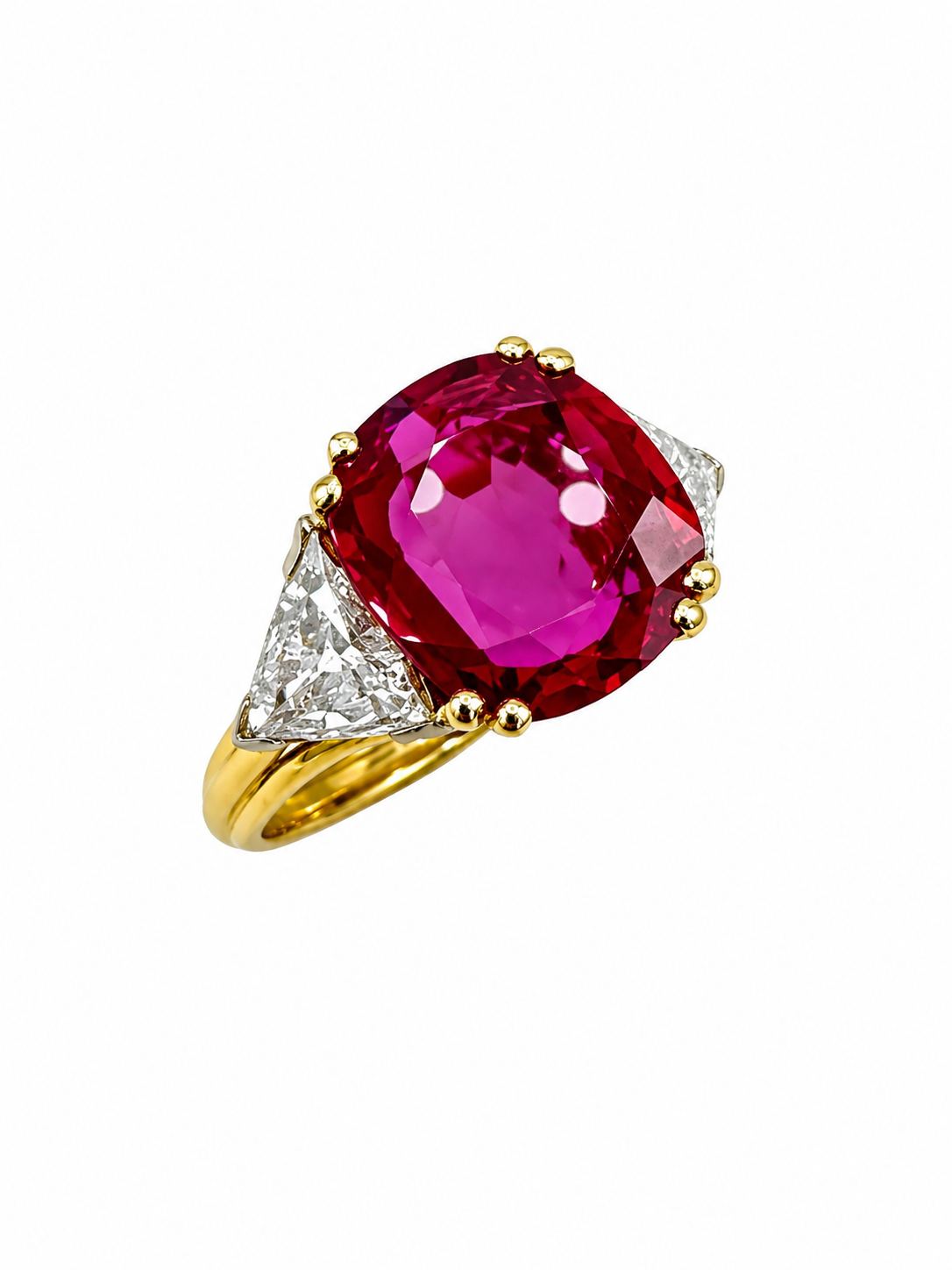
If you have a ruby in a drawer or a safe and want to understand what you own, buy a piece with genuine history, or learn what a stone is worth, our specialists handle these gems every day. Visit us at The Willard Hotel in Washington or the Barlow Building in Chevy Chase, Maryland, or reach out to schedule a time to come in.
Explore estate and antique ruby jewelry in Washington DC, visit our stores today!
Key Takeaways
- Ruby is the birthstone for July and the gem of the 15th and 40th wedding anniversaries.
- A ruby is red corundum colored by chromium, rating 9 on the Mohs scale.
- Pigeon’s blood is the top red, historically tied to the Mogok Valley of Myanmar, and now a recognized laboratory grade.
- More than ninety percent of rubies are heated, so disclosure and an independent report matter, especially above half a carat.
- Rubies run through the Victorian, Edwardian, Art Deco, and Retro periods, each with a distinct look.
- Charles Schwartz & Son, founded in 1888, offers estate rubies, fine watches, custom work, and appraisals at The Willard Hotel and in Chevy Chase, Maryland.
Frequently Asked Questions
Is ruby really the birthstone for July?
Yes, ruby is the traditional birthstone for July. According to the Gemological Institute of America, it is also the gem for the 15th and 40th wedding anniversaries, which is why it appears so often in milestone and estate pieces.
What makes a ruby pigeon’s blood?
Pigeon’s blood is the top color grade for a vivid, near pure red ruby with a faint blue undertone and a strong inner glow. The finest examples come from the Mogok Valley of Myanmar, and major laboratories now apply the term only to exceptional stones.
Are most antique rubies treated?
Most rubies, antique examples included, have been heated to improve color and clarity. Heat treatment is accepted as long as it is disclosed, but an untreated ruby of fine color is rare and commands a premium, which is why an independent report is worth requesting.
Where can I buy or appraise estate jewelry in Washington DC?
Charles Schwartz & Son buys, sells, and appraises estate, antique, and vintage jewelry at two locations. You can view pieces and request a jewelry appraisal at The Willard Hotel in Washington or the Barlow Building in Chevy Chase, Maryland.
Glossary
- Ruby: the red gem variety of the mineral corundum, prized for color, hardness, and rarity in fine quality.
- Corundum: crystalline aluminium oxide, the mineral that forms both ruby and sapphire.
- Chromium: the trace element responsible for the red color in ruby.
- Mogok Valley: the historic gem region of Myanmar associated with the finest pigeon’s blood rubies.
- Mohs scale: a relative scale of mineral hardness on which ruby rates 9 out of 10.
- Birthstone: a gem associated with a calendar month, with ruby standing for July.
- Victorian era: the 1837 to 1901 period whose jewelry often set rubies in yellow gold.
- Edwardian era: the early 1900s style known for delicate platinum work framing rubies among diamonds.
- Art Deco: the geometric design movement of the 1920s and 1930s that used calibré-cut rubies in bold patterns.
- Retro: the 1940s and early 1950s style marked by large gold forms and splashes of colored stones.
- Estate jewelry: previously owned jewelry, often antique or vintage, valued for craftsmanship and history.
- Sunrise Ruby: a 25.59 carat Burmese pigeon’s blood ruby that set a colored stone auction record in 2015.


