
A strand of pearls rarely begins and ends with one person. It moves. It is clasped at a dressing table in Georgetown, worn to a reception at the State Department, packed into a trunk, inherited by a daughter who has it restrung and wears it to her own occasions. By the time an estate pearl necklace arrives at a jeweler’s counter, it has already lived several lives. June is one of the few months with three birthstones, and pearl is the oldest and most storied of them. That history is not incidental to the piece. It is part of what the piece is.
At Charles Schwartz & Son, Washington DC’s oldest jeweler, we have been receiving these pieces since 1888, and we have learned that understanding a pearl means understanding where it has been, not only what it is made of. This article is about how to see a pearl that way: how to read its age, its character, and its story, and what makes fine estate jewelry in pearl a category worth knowing on its own terms.
What an Estate Pearl Carries
A pearl is a living record. It forms inside a mollusk over years, building slowly, and once it leaves the water it continues to respond to the world around it. Skin oils, light, humidity, storage, and wear all leave their impression over decades. That is not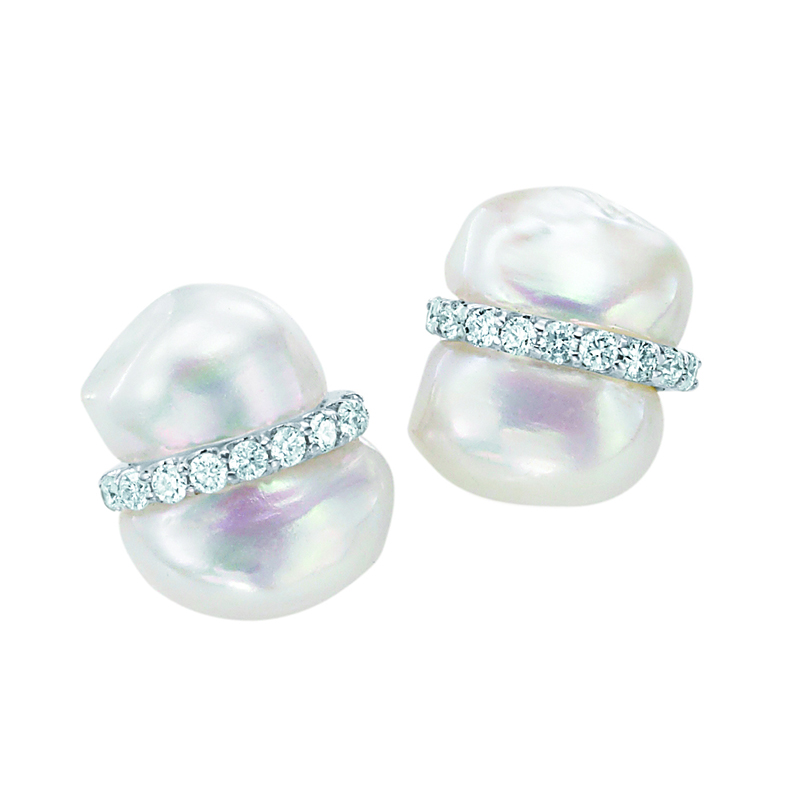 damage. That is depth.
Jewelers talk about luster the way painters talk about light: not what sits on the surface but what seems to come from within. That quality is what gives a fine pearl its presence, and it is something you recognize immediately when you see it in a piece that has been well loved and well kept.
The Gemological Institute of America distinguishes natural pearls, which form entirely without human intervention, from cultured pearls, which are initiated by inserting a nucleus into the mollusk. The widespread availability of cultured pearls from the mid-20th century onward transformed the pearl market and made fine pearl jewelry accessible to far more people. A beautiful cultured pearl strand made today is a genuine and lasting thing. What an estate piece offers alongside that is something different: a specific past, a traceable life, and the particular character that comes with age.
DC Luxury Estate Jewelry: Pearls Through the Decades
The way pearls appeared in jewelry changed considerably across the periods that define the estate market. Reading those shifts tells you something about when a piece was made, and something about the world it was made for.
| Period | Approximate Dates | Characteristic Pearl Use |
|---|---|---|
| Victorian | 1837 to 1901 | Seed pearl work, mourning pieces, sentimental jewelry; pearls often set alongside jet or hairwork as tokens of memory |
| Edwardian | 1901 to 1915 | Long strands, delicate platinum settings, pearl and diamond combinations; a period of great confidence in natural pearl jewelry |
| Art Deco | 1920 to 1939 | Geometric settings, sautoir lengths, pearl used in dialogue with onyx and colored stones for graphic contrast |
| Mid-Century Modern | 1940 to 1969 | Cultured pearls brought new versatility; single and double strands, baroque shapes, bold yellow gold settings with a confident postwar spirit |
Each period produced pieces with their own logic and their own beauty. An Edwardian pearl and diamond pendant reads differently from a Mid-Century cultured pearl brooch, because they belong to different moments and speak a different visual language.
How an Vintage Jewelry Specialist Reads a Vintage Pearl Strand
When a strand of vintage pearls comes across the counter, the knotting between each pearl is one of the first things we look at. Traditional pearl strands were hand-knotted in silk between each bead, with thread sized to the pearl. Over time that thread softens and shifts. A restrung piece may carry newer thread or knots in a different proportion. Knowing when and how a piece was restrung tells you something about who cared for it and how.
The clasp has its own story. Different periods favored different clasp constructions, and a clasp is also the element most likely to have been replaced during a piece’s life. A mismatch between clasp style and strand age is common in estate pieces and worth noting without alarm. It simply means the piece has been tended to.
The match of the strand is something that rewards quiet attention in older pieces. Assembling a well-matched natural pearl strand required gathering pearls of compatible size, shape, color, and orient from separate sources, sometimes over years.
Talk to a Fine Estate Jeweler in Washington, DC To Find Your Next Piece
If you have inherited a strand and want to understand what you are holding, or if you are looking for a piece with genuine history, bring your piece in for a consultation.
Visit Charles Schwartz & Son at The Willard Hotel or in Chevy Chase, Maryland to explore our collection of designer and vintage jewelry.
Key Takeaways
- Estate pearls carry the particular character that comes with age: a history of wear, care, and the hands they have passed through.
- The period in which a piece was made is readable through its metalwork, setting style, knotting, and clasp construction.
- Natural and cultured pearls each have their own qualities and histories. What estate pieces offer is not superiority over modern jewelry but a specific past that a new piece has not yet had time to accumulate.
- Washington DC has a long and particular relationship with pearl jewelry, and the estate pieces that have circulated here carry that history.
- Reading a vintage pearl strand well requires looking at the whole object: nacre, knotting, clasp, and match together tell a more complete story than any single element alone.
Frequently Asked Questions
What makes pearl the traditional June birthstone?
Pearl has been associated with June for centuries and appears in some of the earliest recorded birthstone lists. It is one of three birthstones for June alongside alexandrite and moonstone, but pearl is the oldest designation and the one with the longest continuous history in fine jewelry. The association is thought to reflect pearl’s connection to water, summer, and the luminous quality that has made it prized across cultures for thousands of years.
How can you tell the age of a vintage pearl necklace?
The age of a pearl necklace reveals itself through several details considered together. The clasp style and its construction method, the knotting material and technique, any metal elements and their hallmarks, and the overall design language of the piece all offer period clues. A specialist with experience in estate jewelry can usually place a strand within a generation by reading these elements as a whole. Gemological testing can add further precision by analyzing nacre structure and composition.
Do pearls change over time?
Pearls respond to their environment throughout their lives. Proper care, including occasional wearing and thoughtful storage away from materials that can scratch the surface, helps preserve a pearl’s character across generations. A strand that has been well kept can retain remarkable presence after a century of life. Exposure to perfumes, acids, or prolonged dry storage can affect the surface, but many estate pearls arrive in far better condition than their age might suggest, simply because someone took good care of them.
Is it worth restringing an inherited pearl strand?
Restringing a pearl strand that shows wear in the thread is almost always worthwhile for a piece of genuine quality. Silk thread softens and weakens over decades, and a strand that breaks risks losing pearls that may be irreplaceable. A specialist who works with period jewelry can match the knotting style and thread weight to the age and character of the piece, so the restringing becomes part of the ongoing care of the object rather than an interruption of its history.
Glossary
Pearl: A hard object produced within a mollusk and composed of layered nacre. In jewelry, the term covers both natural pearls, formed without intervention, and cultured pearls, which are initiated by human means. Both have a place in fine jewelry with their own distinct qualities.
Nacre: The layered material that forms the body of a pearl, sometimes called mother of pearl. The depth and quality of nacre is what gives a fine pearl its characteristic inner glow.
Cultured pearl: A pearl produced with human assistance by inserting a nucleus into a mollusk to begin the nacre-forming process. Cultured pearls became widely available in the mid-20th century and transformed the pearl jewelry market, making fine pearl pieces accessible to a much broader audience.
Luster: In pearl grading, luster describes the depth and quality of light that a pearl reflects and appears to emanate from within. It is one of the primary indicators of character in both estate and contemporary fine pearls.
Edwardian: The period associated with the reign of King Edward VII, roughly 1901 to 1910 and extended in jewelry terms to approximately 1915. Edwardian jewelry is known for its delicate metalwork, platinum and gold construction, and the confident use of natural pearls alongside diamonds.
Art Deco: A design movement that shaped jewelry from roughly 1920 to 1939, characterized by geometric forms, bold contrasts, and a modernist sensibility. Pearl was used frequently in Art Deco pieces as a counterpoint to onyx, colored stones, and white metals.
Mid-Century Modern: A period in jewelry design spanning roughly 1940 to 1969, marked by confidence in new materials and forms. The postwar era saw cultured pearls become widely available, and Mid-Century jewelry often paired them with bold yellow gold settings and sculptural designs.
Birthstone: A gemstone traditionally associated with a month of the year. Pearl is the historic birthstone for June, a designation that appears across multiple cultural and historical birthstone traditions.


