
The jewelry world uses three distinct terms that sound interchangeable but carry precise meanings: estate, vintage, and antique. Understanding these distinctions transforms how you appreciate inherited treasures, make informed purchases, and communicate with jewelers. At Charles Schwartz & Son, we have spent over 135 years guiding Washington DC clients through these nuances with the kind of expertise that only comes from handling thousands of historic pieces across five generations.
What Is Estate Jewelry? A DC Jeweler Guide
The term estate jewelry conjures images of manor house sales and velvet-lined heirloom boxes, but the reality proves far simpler and more accessible. According to the Gemological Institute of America, estate jewelry encompasses any previously owned piece, regardless of provenance, age, or pedigree. The previous owner may well be alive and thriving. The piece itself could date from last spring or the reign of Queen Victoria.
Age holds no sway in the estate designation. A contemporary diamond engagement ring purchased three years ago and consigned today becomes estate jewelry the moment it changes hands. However, estate pieces frequently overlap with vintage or antique categories because previously owned jewelry naturally accrues age as it passes through generations and across hands.
Understanding DC Vintage Jewelry
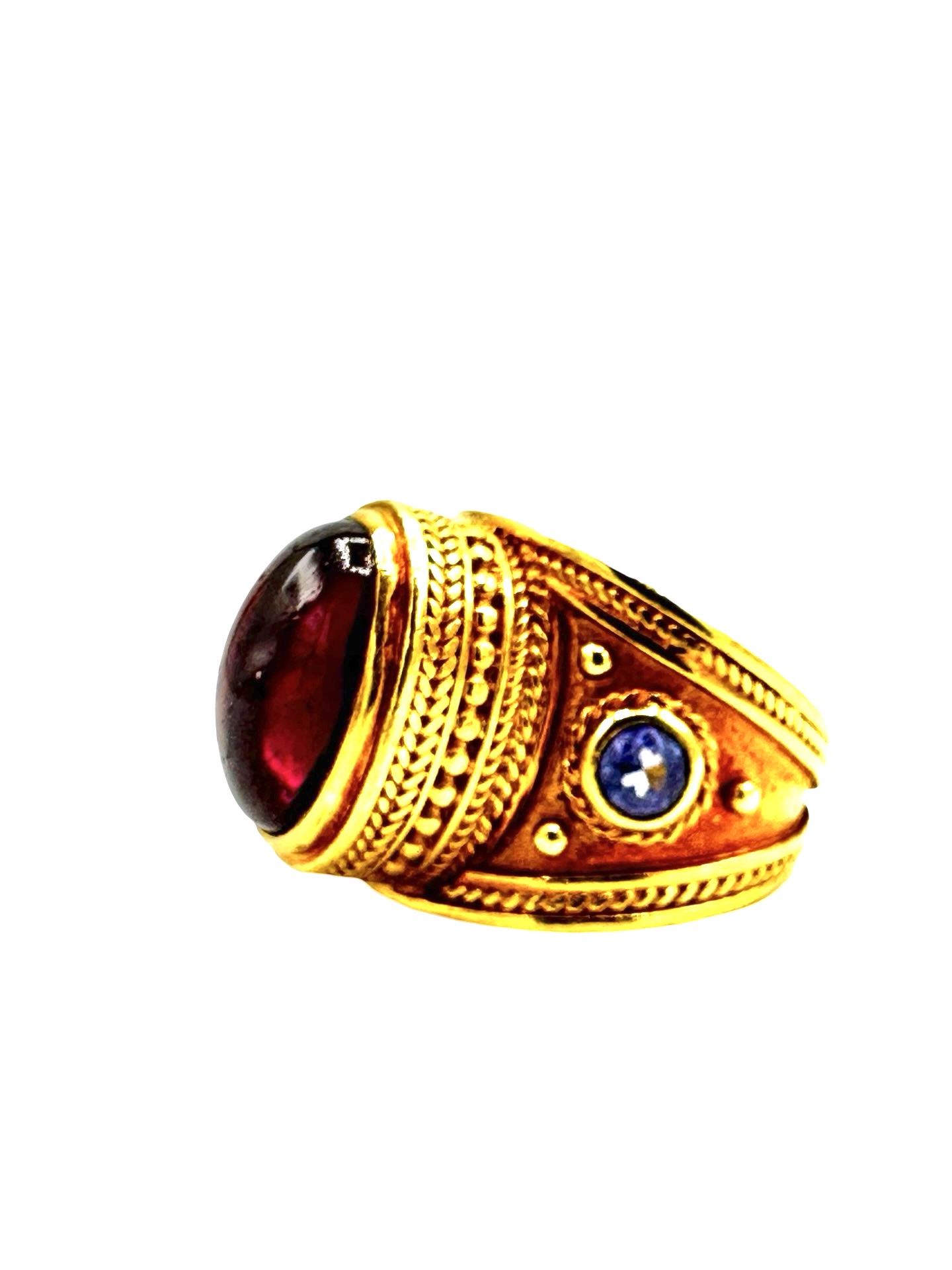
Vintage jewelry carries more exacting age requirements than its estate counterpart. A piece of jewelry is considered “vintage” if it is between 20 years old and 100 years old.
The vintage jewelry category captures an extraordinary range of design movements and cultural moments. Pieces from the 1940s through the 1970s fall squarely within vintage parameters, encompassing the bold Hollywood glamour of the Retro era, the optimistic curves of Mid-Century design, and the experimental freedom of the psychedelic Sixties. Each decade produced distinctive aesthetic signatures that remain instantly recognizable.
DC vintage jewelry delivers practical advantages beyond historical appeal. These pieces typically possess sufficient structural integrity for regular wear, unlike the more fragile antiques that preceded them.
Antique Jewelry in Washington DC: Defining Antique Pieces
A piece of jewelry earns its antique designation the moment it reaches 100 years of age. The century mark represents more than arbitrary categorization. It signals entry into a realm where pieces become historical artifacts that survived a full human lifespan and witnessed generations of change.
However, the very age and delicacy that make antique pieces precious also render many unsuitable for daily wear. These jewels often serve as treasured heirlooms, investment pieces, or museum-quality collectibles rather than everyday accessories.
At Charles Schwartz & Son, we appraise Georgian, Victorian, and Edwardian pieces, helping families understand both the historical significance and market value of inherited treasures that carry stories spanning centuries. We also provide DC antique jewelry repair services to restore and preserve these delicate pieces for future generations.
Understanding the Historic Eras
Understanding the major jewelry periods transforms abstract categories into recognizable styles, helping you identify designs, estimate ages, and appreciate the cultural context surrounding vintage and antique pieces.
Whether you want to shop estate jewelry for your collection or authenticate inherited pieces, knowing these eras proves essential. These are some periods we encounter at Charles Schwartz & Son:
Georgian Era (1714-1837)
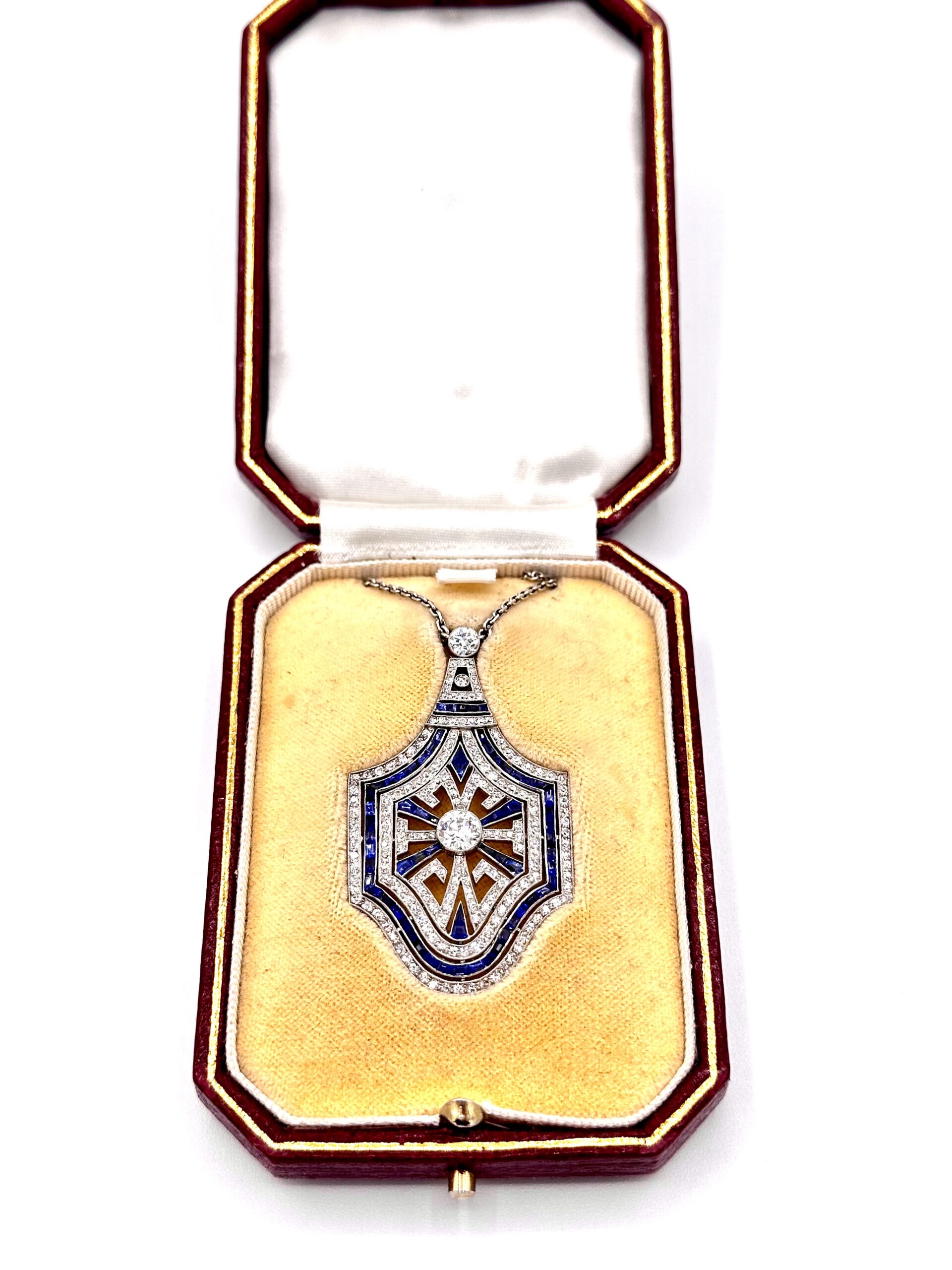
The Georgian era spanned the reigns of Kings George I through IV, with styles evolving from Rococo to Neoclassical. Jewelers handcrafted pieces in silver, gold, or pinchbeck set with diamonds, rubies, sapphires, garnet, topaz, and emeralds, featuring flower motifs, scroll patterns, and ribbon designs. Few Georgian pieces survive today. As fashions changed, owners melted many pieces to extract precious metals for trendier jewelry. This makes remaining Georgian pieces exceptionally rare and valuable.
Victorian Era (1837-1901)
The Victorian era takes its name from Queen Victoria of England, who reigned from 1837 to 1901. This transformative period witnessed rapid technological advancement including automobiles, electricity, and indoor plumbing. The era divides into three distinct subsets: Early, Mid, and Late Victorian. Each reflects a defining period of Queen Victoria’s life and reign.
Edwardian Era (1901-1915)
The Edwardian era, named after King Edward VII, revolutionized jewelry design with innovations still used today including calibre, baguette, triangular, trapeze, and marquise gemstone cuts. Jewelers also developed milgrain, a metalwork technique creating a beaded or hammered-ridge appearance along jewelry edges. Edwardian jewelry exemplifies understated elegance through extensive filigree and milgrain work. Nature-inspired motifs gave way to refined designs including tassels, ribbons, bows, lace, and scroll patterns. Platinum replaced gold as the preferred metal, paired primarily with diamonds to create intricate designs reflecting the lace and feathers popular in fashionable garments. Longer necklaces with pendants or tassels became prominent. While diamonds dominated, garnets, peridots, pearls, rubies, and sapphires also appeared frequently.
Art Nouveau Era (1895-1915)
The Art Nouveau era, meaning “new art,” launched an entirely new artistic movement characterized by fluid, vibrant designs. Japanese art inspired depictions of nature, landscapes, and the female form, along with animals including dragonflies, birds, reptiles, bats, and owls that evolved into mythical hybrid creatures. Art Nouveau jewelers emphasized creative settings using amber, moonstones, pearls, opals, and synthetic gemstones. The era introduced unprecedented materials including enamel, glass, shell, copper, and horn. Enamel proved particularly valuable as it could be painted any color to authentically recreate natural hues impossible to achieve with available gemstones.
Art Deco Era (1920-1935)
Art Deco emerged during the Jazz Age and Roaring Twenties, inspired by industrial and architectural advances. The style features striking linear symmetry, bold geometric elements, abstract patterns, and ornate detailing. Women celebrated this period of unprecedented wealth by wearing dazzling diamond, emerald, ruby, and sapphire jewelry. Cultured pearls became popular evening accessories, often paired with Art Deco clips or brooches. Cartier, Tiffany & Co, and Van Cleef & Arpels produced the finest Art Deco pieces, many of which remain highly sought after today for their distinctive style and unmatched beauty.
Selling Luxury Jewelry in DC
Many families discover they own estate, vintage, or antique pieces they no longer wear or need. Selling heirloom jewelry requires understanding current market values, authenticating pieces properly, and working with reputable buyers who offer fair prices. At Charles Schwartz & Son, we have purchased fine jewelry in Washington DC and heirlooms for over 135 years, providing transparent evaluations and competitive offers.
When you sell estate jewelry in DC through our showroom, our experts examine each piece for authenticity, condition, craftsmanship quality, and current market demand. We consider factors including period attribution, maker marks, gemstone quality, metalwork integrity, and provenance documentation. This comprehensive evaluation ensures you receive accurate pricing based on both intrinsic value and collectible appeal.
The process for selling vintage jewelry in DC follows similar protocols but accounts for the different market dynamics of 20th-century pieces. Vintage jewelry often appeals to fashion-conscious buyers seeking wearable pieces rather than museum-quality antiques, affecting both pricing and demand. Our decades of market experience help us position pieces appropriately whether you are selling a 1940s Retro cocktail ring or a complete Art Deco parure.
Key Takeaways
- Estate jewelry means any previously owned piece regardless of age, vintage jewelry requires 20 to 50 years (with most professionals preferring 50 years), and antique jewelry must be over 100 years old.
- Estate, vintage, and antique categories frequently overlap. A single piece can carry multiple designations simultaneously.
- Each jewelry era displays distinctive characteristics in metalwork, gemstone cuts, and design motifs that help identify period and authenticity.
- Understanding these terms enables clear communication when buying, selling, or appraising jewelry with professionals.
Frequently Asked Questions
Can estate jewelry also be vintage or antique?
Absolutely. Jackie Abraham’s estate jewelry guide clarifies that estate pieces can simultaneously qualify as vintage or antique depending on age. Since estate simply designates previous ownership, a 120-year-old ring would carry all three classifications at once: estate (previously owned), vintage (over 50 years), and antique (over 100 years). The categories overlap and complement rather than exclude each other.
Is antique jewelry more valuable than vintage jewelry?
Not automatically. The International Gem Society emphasizes that value depends on multiple factors including origin, certification, rarity, condition, and craftsmanship quality. A pristine Art Deco bracelet from the 1920s, technically vintage, might command significantly higher prices than a damaged Georgian brooch, clearly antique, depending on artistic merit, provenance, and current market demand. Age alone never determines value in isolation from other critical factors.
Where can I buy authentic estate, vintage, or antique jewelry in DC?
Charles Schwartz & Son has curated collections of Washington DC fine jewelry for over 135 years, establishing us as the city’s oldest jeweler. Our specialists personally examine each piece for authenticity, quality, condition, and proper attribution before offering it for sale. We also provide comprehensive appraisal services to help clients understand pieces they already own, documenting provenance and current market value.
Ready to Explore DC Jewelry?
Whether you have inherited a family heirloom requiring authentication or you are searching for a distinctive piece carrying genuine history, Charles Schwartz & Son brings over a century of expertise to every consultation.
Sources
Gemological Institute of America. “Tips for Purchasing Estate Jewelry.” GIA 4Cs Blog.
https://4cs.gia.edu/en-us/blog/tips-for-purchasing-estate-jewelry/
International Gem Society. “Antique Jewelry and Jewelry History.”
https://www.gemsociety.org/jewelry-lapidary/antique-and-jewelry-history/
International Gem Society. “Jewelry Investment Pieces: Which Gemstones Hold Value Over Time?”
https://www.gemsociety.org/article/jewelry-investment-pieces-which-gemstones-hold-value-over-time/
Estate Diamond Jewelry. “What’s the Difference Between Antique and Vintage Jewelry?”
https://www.estatediamondjewelry.com/difference-antique-vintage/
Estate Diamond Jewelry. “The History of 7 Jewelry Eras.”
https://www.estatediamondjewelry.com/eras-of-antique-jewelry/
Jackie Abraham. “Myths, Misconceptions, and the Truth About Estate Jewelry.”
https://www.jackieabraham.com/myths-misconceptions-and-the-truth-about-estate-jewelry


